If you’re asking how to get new teeth, this guide explains dental implants step by step so you know what to expect. You’ll learn what “new teeth” means with implants, who can get them, the surgical and restoration steps, recovery, costs, and how to start. This is for people with missing or failing teeth who want a long-term, natural-feeling solution. Read on to learn how to get new teeth in Bozeman, Montana and whether implants are right for you.
What “getting new teeth” with dental implants actually means
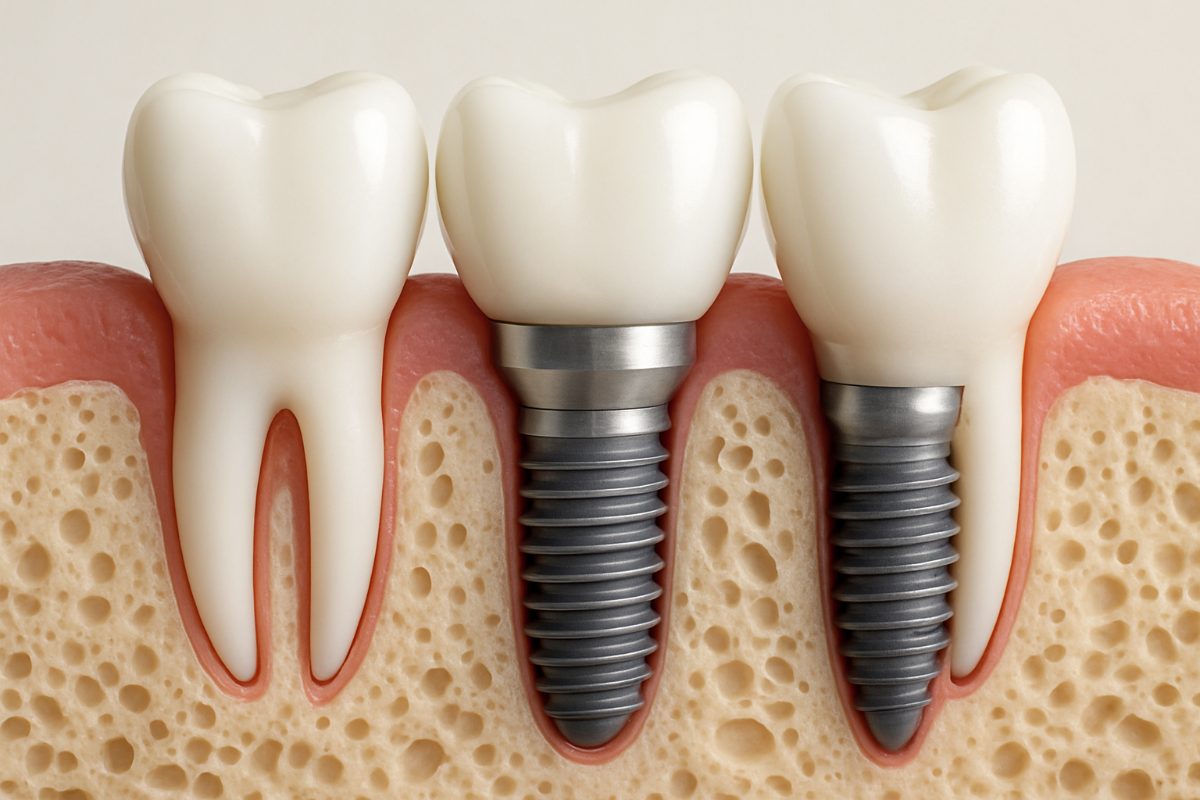
Getting new teeth with dental implants can mean a single-tooth implant, an implant-supported bridge replacing several teeth, overdentures that snap onto implants, or full-arch solutions like All-on-4 that replace a whole row of teeth. Compared with removable dentures, implants feel and work more like natural teeth, look better, and preserve jawbone by sending normal chewing forces into bone.
Who is a good candidate
Good candidates are generally in fair health, without uncontrolled gum disease, and with enough jawbone to support implants. Smoking, uncontrolled diabetes, certain medications, and low bone volume can affect candidacy. A clinical exam and 3D imaging are needed to check bone, nerve position, and overall oral health before deciding.
Step-by-step: how to get new teeth with dental implants
Consultation and digital planning
Your team will take 3D scans, digital bite records, and photos. They use these to plan implant size, location, and whether guided surgery is needed. Planning helps predict outcomes and often shortens surgery time.
Surgical placement
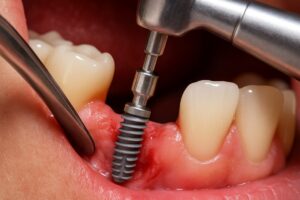
During implant surgery, titanium posts are placed in the jawbone where teeth are missing. Sedation options range from local numbing to IV sedation. Many practices use guided placement for accuracy, reducing risk to nearby nerves and sinuses.
Bone grafting and sinus lifts (if needed)
If bone is too thin or low, grafting or a sinus lift may be done first to build volume. These add healing time but improve long-term success. Your surgeon will explain materials, risks, and timeline.
Restoration phase
After healing and osseointegration (weeks to months), a prosthesis is attached: a crown for one tooth, a bridge, or a full-arch zirconia restoration. Temporary teeth may be used until the final prosthesis is ready for strength and fit.
Recovery, maintenance, and expected timeline
Expect initial healing in 1–2 weeks for soft tissues and 3–6 months for full bone integration. Follow-up visits check healing, adjust bite, and finalize the restoration. Maintain implants with good brushing, flossing, and regular dental visits. Avoid hard foods for several weeks after surgery.
Costs, insurance, and financing
Costs depend on how many implants, need for grafting, type of prosthesis, and clinician experience. Insurance may cover parts of the restoration or extractions but often not the full implant cost. Many offices offer payment plans, third-party medical financing, or phased treatment to help patients afford care.
Why choose an oral and maxillofacial surgeon for full-mouth work
For complex full-arch cases, an oral and maxillofacial surgeon has surgical training and hospital experience. Gallatin Valley Surgical Arts in Bozeman, Montana focuses on advanced implant and reconstructive procedures using 3D planning, guided placement, zirconia restorations, bone grafting, and safe sedation. Dr. Brenda Hall, DDS, MD, is board-certified with over 20 years’ experience and thousands of full-arch cases, bringing surgical precision and predictable outcomes.
How to get started
To begin, book a consultation and bring your medical history and any recent X-rays. Ask about 3D imaging, expected timeline, grafting needs, sedation options, and financing. If you want to learn how to get new teeth in Bozeman, Montana, schedule an evaluation to get a personalized treatment plan and clear next steps.